
Guide to Knitting Styles
Exploring the World of Knitting Styles!
Hey there! I’m Rachel, a passionate artist with a special love for the art of knitting. Ever wondered about the myriad ways you can knit? Well, I’m here to unravel the mystery for you. There are two major knitting styles, and I’m going to dive into both. I’ve predominantly been an English Style knitter, but let’s not sideline the intriguing Continental Style.
The Two Titans: English vs. Continental Knitting
Though I started off with the English Style, my journey led me to discover the fascinating Continental method. It might be a tad challenging for someone like me who’s seasoned in English knitting, but it’s swift as the wind once mastered! And hey, varying your knitting style can give those hardworking joints a well-deserved break. Remember my tennis elbow episode last year? I wish I could have switched to Continental knitting during recovery!
Now, while there are other knitting methods like Portuguese, combination, and lever knitting, in this guide, I’ll zoom into the two giants: English and Continental.
English Knitting
Commonly known as American knitting or throwing, this style stands out as the crowd-favorite. It’s touted to produce neater stitches given its ease in controlling yarn tension. Here, the yarn is gracefully held in the right hand and “thrown” over the needle. Newbies? This is typically your starting point. It’s not just the English-speaking world that’s smitten, even China loves it!
Continental Knitting
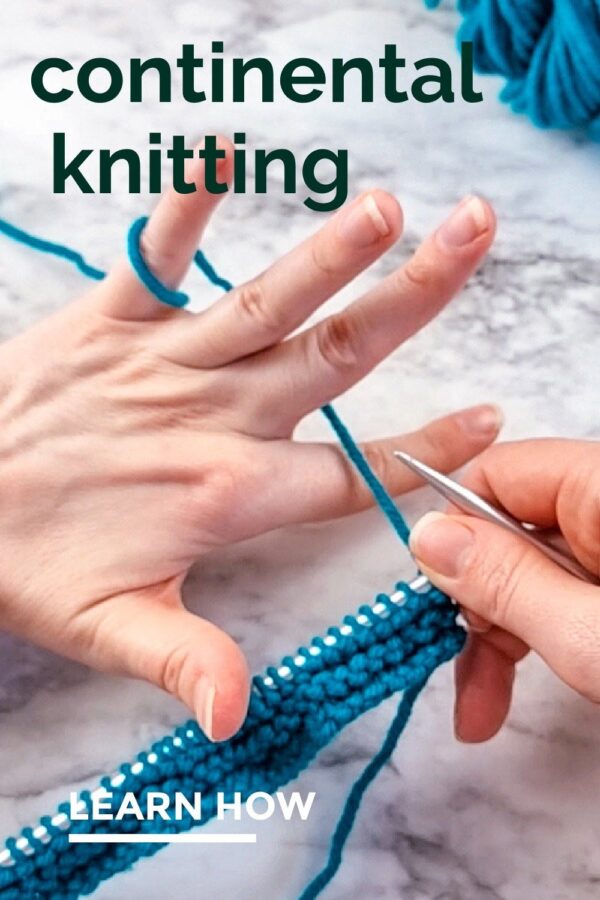
Also known as German knitting or picking, this style has a strong footing in northern and eastern Europe. Some even say it’s the go-to method in Japan. Historically, it faced a bit of a hiccup during World War 2 due to its German association. If you’re a crocheter, you’ll likely sway towards this style. Why? The yarn is held in the left hand, and the movement is more subtle, involving the left index finger and occasionally other fingers. However, be a bit patient with purl knitting; it’s a tad tricky in this style.
So, Which Style Takes the Crown?
While Continental knitting is often hailed for its speed, the best method truly boils down to personal preference. Each style has its charm and quirks. Whether you’re left-handed, right-handed, a newbie, or a pro, both methods have something special to offer. And if you’re someone who loves coloring their projects with multiple yarns, mastering both styles can be a game-changer! So why not take a leap, experiment, and perhaps find a new knitting love?
Key Differences at a Glance
| English Knitting | Continental Knitting | |
|---|---|---|
| Yarn Holding Hand | Right | Left |
| Stitch Creation | “Throwing” or “Wrapping” | “Picking” or “Grabbing” |
| Speed | Standard | Generally Faster |
| Tension Control | Easier for beginners | Requires some finesse |
| Suitability | Better for right-handed folks | Preferred by left-handed or crocheters |