
Origins of Knitting
The Fascinating Journey of Knitting!
Ever pondered the roots of knitting? Curious about its creators or the story behind its birth? Hey there, I’m Rachel! I adore the world of artistry and especially knitting. Let’s dive deep into this yarn tale together!
The term ‘knitting’ springs from the word ‘knot’. This could have its genesis in the Dutch word ‘knutten’ or the Old English ‘cnyttan’. Its primary purpose was simple: to provide humans with protection from harsh weather.
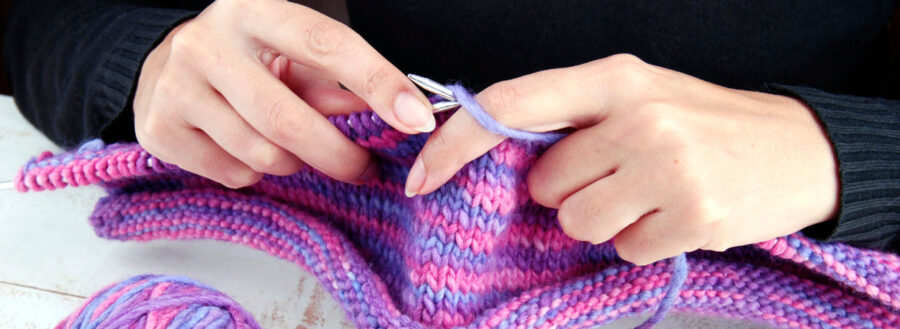
Knitting is an art of crafting fabric with a yarn strand. Two or more needles loop the yarn into interconnected sequences, giving birth to fabric or clothing items. Unlike weaving, there’s no need for looms or complex equipment – just needles or even fingers. A perfect craft for the nomadic or those without fixed farms!
History showcases the oldest knitted items as socks from 11th century CE Egypt. And guess what? Socks and stockings were among the earliest knitted items! This ancient craftsmanship used wool, looped and knotted with a single needle.
Origin tales hint at the Middle East as knitting’s birthplace. It then traveled to Europe via Mediterranean trade routes, eventually reaching America through European colonization. Historical treasures from Egypt, dating between the 11th and 14th centuries CE, include blue and white cotton stockings and vibrant woolen pieces.
Zooming into the Scottish Isles during the 17th and 18th centuries, knitting was a family affair! From socks and sweaters to accessories, the Isles brimmed with knitted delights. Using fair isle techniques, intricate patterns emerged. Wool’s natural oils made sweaters an essential for fishermen, shielding them from brutal winter chills during their fishing escapades.
And did you know? Many of our beloved knitting designs, like the cable stitch, hail from early 20th-century Ireland. And the first mechanical knitting contraption? William Lee of Calverton birthed it in 1589, primarily for stocking creation.
As time zipped by and technology soared, knitting machines flourished. Yet, the factories took a while to catch up. Hand knitting became more of a cherished hobby as factories emerged. Over decades, knitting’s allure waxed and waned, influenced by fashion trends. The 80s saw a dip, with knitting stamped as ‘old-school’. The availability of cost-effective machine-knitted items meant folks could snag a sweater for the price of wool and a pattern, or even cheaper.
By the late 90s, numerous individual knitting stores either shut their doors or merged with mega chains. Yet, hope wasn’t lost! Thanks to the internet’s dawn in the 21st century, knitting experienced a renaissance as craft enthusiasts united and shared their passion online.
And who can forget the celebs? From Cameron Diaz to Dakota Fanning, stars embraced the knitting craft. A fun fact? Men too are rediscovering knitting’s therapeutic magic. Just take a glance at Stephen West!
For the ultra-passionate, there’s the yearly knitting Olympics that began in 2006. But even if you’re a casual knitter, why not craft squares for a heartwarming needy blanket?
| Key Points | Details |
|---|---|
| Origin | Middle East ➔ Europe ➔ America |
| Oldest Artifact | 11th Century CE socks from Egypt |
| Notable Techniques | Fair isle techniques from Scottish Isles |
| Modern Knitting | Revived in 21st century with internet & celebrities |